Friday, 23 March 2012

Corporate Social Responsibility…another company objective!

Shareholder wealth maximisation has been a theme throughout the previous blogs as the main corporate objective. If that is their main objective, what else do companies aim to achieve?
Companies can have many goals, aims and objectives, all you have to do is look on their websites but one objective that keeps making an appearance is corporate social responsibility. Many people see companies as money grabbing, unethical and greedy entities, evidently some are worse than others! So what is it that companies do to show the public and potential investors that they are not bad news?
The first question that needs to be considered is what is corporate social responsibility? Well in simple terms it’s when a company acts in a way that socially respected and accepted. This can be anything from being environmentally friendly (the most common form) to being aware and helpful in the companies chosen location, such as contributing money to the local area. There are many examples that dominate companies which show them being socially responsible, but how does this impact on the company as a whole?
One company who hit the news in 2011 was HP, an electronics company, which most people will know for their laptops, printers and ink cartridges. HP was found by the campaign group Greenpeace to be “the most sustainable consumer electronics maker” (BBC, 2011), they topped companies such as Dell and Nokia. Greenpeace highlighted in their report that “This year HP is in top position because it scores strongly for measuring and reducing carbon emissions from its supply chain, reducing its own emissions and advocating for strong climate legislation” (Greenpeace, 2011) The title of “most sustainable consumer electronics maker” shows them being socially responsible, as it required them to be the most efficient in cutting out waste and reducing their carbon footprint. Yet, what is the point in this, they are supposed to be focusing on shareholder wealth maximisation not reducing their carbon footprint?

Although, shareholder wealth maximisation is the main goal of a company, they need objectives which help them achieve this. Many investors have a portfolio of companies which they have invested in. Within this portfolio is a checklist, which states key features they want to find or not to find in a company for example ‘I will only invest in a company that shows consideration to the environment’. In cases like this HP wouldn’t be discounted, as they are showing themselves to be socially responsible especially in terms of the environment. The outcome may well be, more investors on board which equates to more money and investment in activities which will grow the company and maximise long term shareholder wealth.
HP is not the only company showing corporate socially responsible behaviour: Sainsbury’s and their active kids vouchers, shows a responsible nature towards schooling and the fight against obesity. Another example would be car companies, producing low emission cars in a fight to save the environment. Also the government introducing a grant scheme which reduces the price of electric cars shows another level of social responsibility.
Sources used:  
http://www.greenpeace.org.uk/blog/climate/top-spot-goes-hp-our-latest-guide-greener-electronics-20111109
http://www.bbc.co.uk/news/technology-15671823

Thursday, 15 March 2012

UK crunch time

Since the headline of August 9th 2007, the recession or the credit crunch has been in the headlines for 5 years now and is still going strong. The year 2007 saw something totally unexpected hit the media and the public were shocked by the news! Everyday people were unaware that the days of cheap and easy credit were about to go out of the window. There was much debate about the start of the 2007 financial crisis and where the problems all began. It has been pinpointed to August 2007 when the French bank BNP pariahs initiated a sharp rise in the price of credit (BBC, 2009). After this worrying day, the effects of the credit crunch or financial crisis have continued to ripple through the years and it’s still causing problems today. While many researchers and analysts have looked into the causes of this global recession, one theme appears to sum everything up: Loans and credit were given out to easily and to people who were too risky, banks muddled up debt packages, selling and buying them at a credit rating totally unbefitting for the risk associated. The result, credit prices have gone sky rocketing, confidence in spending, lending and borrowing have plummeted! Where then does that leave us?

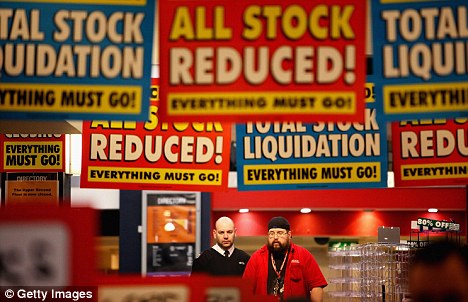
A trip down the high street will emphasise the continuing effects of the 2007 economic crisis. Woolworths, Peacocks, La Senza were just some of the high street names to collapse and today’s news highlights that the crisis is still claiming more victims with shops like HMV and game questioning their futures. The perhaps more shocking feature of the crisis, is the banks. Everyone has an expectation that banks are safe...that’s what you lead when growing up, put your money in a bank, they’ll look after it for you and often increase what you save with interest. Well as the economic crisis hit, banks became a black spot, the news of Northern Rock showed how bad banks can go wrong. The once well known bank with a good reputation has now been nationalised, and is still remembered as the bank in the crisis whose customers waited outside to try and get their money before the bank went bust. With big branded and well known shops closing down all around us and banks in trouble, the question that much of the public was asking is what’s happening to our economy?

Well the first thing to note is, while retailers are the visible every day victims of the crisis, consumers, banks, the government and basically everyone with a loan, any financed belongings or those who just like shopping are victims. The BNP Pariahs price rise for credit was only the start. By February 2008 UK consumer confidence hit a nine year low (Guardian, 2010) with inflation reaching unprecedented levels, job losses due to business cut backs and closures, consumer spending is only for the few and lucky. You may ask, why then doesn’t everyone borrow money? If only it was that easy, the way the recession works is, it affects everything in terms of the economy. The once easy to get credit and loans from the banks is now near impossible to get your hands on. Everyone is far too risky, and as a result those who have a mortgage are much more likely to default, while those who want a mortgage, Good Luck!

The housing market is one which is beyond a doubt still suffering, not only is it difficult to get a mortgage because banks don’t have the money and won’t lend it to people because of the risk of default. The housing market has seen prices falling at a dramatic rate, with those who had mortgages looking at futures of negative equity (Guardian, 2010).

All of these recessionary affects look like they are going to continue into the foreseeable future, only this week are we seeing the continuous rippling consequences. The gaming retailer GAME is one company in the headlines this week. It hit the news when the gaming retailer failed to impress suppliers and as a result couldn’t get its hands on the much awaited Mass effect 3! This seriously will affect sales, reputation and customer loyalty as having the most up to date games on the release date is a key success factor for this company. The losses from this are substantial and the BBC reported that because of the sales loss, rent is likely to go unpaid, resulting in the company possibly entering administration (BBC, 2012)! How many more high street retailers can possible disappear? And will this recession ever end?

The causalities of the credit crunch are likely to continue, with companies like HMV and Water stones already showing signs of following GAME. The outlook for the UK is questionable and much argued, some say the housing market is on the increase and money is getting easier to lend. However it’s hard to believe when we are still seeing massive retailers closing on our high street, unemployment rising continuously and for sale signs outside of houses for months or years (BBC, 2012)! It seems the future of the economy is unpredictable and unknown.


Sources used:


Sunday, 11 March 2012

Mergers and acquisitions or even an alliance...even more choices!!!

When companies decide to merge or one company buys another company (acquisition) its big news! The media and public talk about it, argue over it and either think it’s a great idea or a bad one. There have been some major mergers and acquisitions in the past years, such as Exxon and Mobil, AOL and Time Warner, Cadburys and Kraft just to name a few. The sums of money that companies put into these mergers and acquisitions is the stuff of dreams to us normal everyday people and you may ask yourself why? Why do these companies choose to take this strategy of buying out another company or merging together, especially when there is such a huge amount of money involved?

Well as the theme of these blogs has been, the simplistic answer is to maximise shareholder wealth. That is the companies main goal and everything they do leads towards achieving this. However, there are more subtle reasons also for deciding to merge or acquire.

One reason a company may decide to merge with another is because they want to expand and the marketplace may be saturated and highly competitive. Why then don’t they approach a foreign market and use FDI? Well an easy answer is some massive multinational companies have already taken advantage of these markets and still want to get even bigger!

Acquistions and mergers are massive in the car market, however another less complicated process which is similar to a merger is an alliance. One alliance in the news at the moment is the GM-Peugeot alliance Peugeot and GM are huge car providers covering Europe and America. As the car market is highly competitive, it relies on low costing, innovation and co-operation to survive. The car industry is littered with takeovers and acquisitions and also with mergers. In such a competitive market, companies aim to beat each other and sometimes the best way to eliminate competition is to buy them out. However, the main problem with acquisition is the huge disadvantages that come with it. The main one is cost! Substantial amounts of money are required to buy out another car company, especially one that’s doing well. Also deciding on a price for a company is something anyone would struggle with, its easy to price physical assets, but intangible things like possible future earnings, reputation and their expertise are near enough impossible. This results in the bidder usually paying a lot more for the company than it was actually worth. Another problem is integrating that business into your own, it causes job losses, you won’t need two financial managers so one will have to go, and this contributes to making acquisition unattractive. So is acquisition is out what is left?

A merger, GM and Peugeot think it’s a good idea, but why? Well BBC argues that while both have a major presence in the car market, GM is massive in America, but no where near as big in Europe and vice versa for Peugeot. So instead of one buying the other out, why not create an alliance together and help each other, using each company’s expertise to get instant access to customers and develop their share in the market. It seems to make perfect sense doesn’t it? GM and Peugeot have done this alliance for two reasons, according to the BBC:
  • ‘the sharing of vehicle platforms, components and modules and

  • the creation of a global purchasing joint venture for the sourcing of commodities, components and other goods and services from suppliers, with combined annual purchasing volumes of approximately $125bn.’ (BBC, 2012)
These reasons will allow both companies to join together which will allow them to share each others knowledge and expertise in order to create a bigger customer base, develop their operations and as a result provide shareholder wealth. The New York Times argues that the alliance will create annual savings of around $2bn for both companies together. Will all these benefits for the companies, why then don’t all companies take this approach?

http://www.youtube.com/watch?v=WRpTP5kMynA (watch a video about the alliance)

Well this alliance between GM and Peugeot still has some pitfalls, the savings will only start after the first 2 years, until then the companies will be cutting jobs and closing down manufacturing plants. In this time, the companies are likely to see a dip in their reputation, as the public will see job losses as such a negative aspect and will argue the companies aren’t being socially responsible. In addition, the logistics and negotiations of creating an alliance/merger are hugely in depth and complicated. However, at the end of the day the benefits for the companies and the shareholders will be massive, even if it is in the long term! Yet again it appears that if the company aims to create shareholder wealth and improve their market position they have to make a choice between being not as socially responsible in the short term, so that they can improve overall in the long term!

Sources Used: Financial Times, New York Times, BBC news

For more Information:

Friday, 2 March 2012

Everyone is talking about Foreign Direct Investment...What is it all about??


When it comes to large companies deciding to expand their business, there are numerous ways they can achieve this. Obviously they want to do it in a way that maximises shareholders wealth so that they achieve their main goal! Although companies have the option to expand into their domestic market, when this becomes saturated they need a new market to take hold of and grow into. One way of doing this is to become multi-national and take hold of foreign markets around the world. They can enter the foreign markets in numerous ways such as exporting, licensing and the much talked about foreign direct investment. The question is which one do they choose?

When it comes to exporting, many companies like to use this method because it allows them to remain in their home country and domestic market and still sell their products around the world. However there are serious problems with this, such as high costs depending on what you’re selling! For example if you’re a cement company, why stay in England? It will cost a fortune because of the weight of the product and at the end of the day; you can make cement anywhere can’t you?  Therefore the company may decide to use licensing! They can go to a local supplier in a foreign country such as China and teach them how to make their cement product. The local supplier will then sell it in the Chinese market on behalf of the UK cement company. However, as has been the case with other licensing agreements, what is stopping the Chinese supplier then using the UK Company’s techniques and selling the product under their own name? Nothing is the answer! This has been known to happen to companies which as a result have then gone bust...Schwinn is a perfect example of this!

If all the other options are taken what is left? Foreign Direct Investment...everyone’s heard about it, countries are always trying to encourage it and companies are always using it, yet most people don’t know what on earth it is! Well in simple terms, it’s when a company buys a significant amount of the ownership of a company in another country to gain control over it, or it when a company buys physical assets abroad. One form of foreign direct investment is ‘Greenfield investment’ which is when companies go abroad, buy land and build their business on it. Companies which are known for foreign direct investment are major worldwide supermarkets such as Wal-Mart and Tesco, also McDonalds and Burger King use this to enter into new markets.

As I mentioned above, countries are always trying to encourage this and you may ask yourself, why? Well when a company invests into a country, that money then flows into the economy helping with many features such as job creation. One country who has recently opened up channels to encourage FDI is India, who has opened up the opportunity for large retail supermarket chains to invest there. ‘India approved allowing overseas companies to own as much as 51 percent of retailers selling more than one brand, paving the way for global companies such as Wal-Mart Stores Inc. (WMT) and Tesco Plc to own stores.’ (Bloomberg, 2011)This will encourage companies such as Wal-Mart and Tesco’s which are huge multinational companies, to take advantage of this new market, so they can expand further and as a result maximise shareholder wealth. India has also eased up its retail rules which will make the likelihood of Wal-Mart or Tesco investing there greater.


As I talked about above, India will be developing its rules to allow FDI into the country because of the advantages it brings with it. Bloomberg (2011) talks about how the investment from foreign companies into the Indian retail sector will bring in around 10million jobs, help farmers with increased prices and one condition of the relaxed rules is that foreign companies invest in the Indian infrastructure. You may ask yourself that while it brings so many good things to an economy, what then it does for the company?

Well, India boasts a population of around 1,170,938,000 (World Bank) and if Wal-Mart for example decided to invest in supermarkets there, they are possibly opening their customer base to another 1,170,938,000 people!  This could potentially create a massive boost in profits and as a result will most likely contribute to the maximisation of shareholder wealth! However FDI does also bring uncertainty and companies are at the disposal of the political forces in that country... 2012 shows the uncertainty that Foreign Direct Investment can bring, much of the Indian population were opposed to the new rules which will allow multinational giants to dominate their retail markets. The result...the government has put on ice the new rules which could prevent Tesco’s expansion into India! However Tesco are not letting this set back stop them as they are determined to enter into a market which offers so much potential! Although the government has frozen the rules for the moment, are they really likely to not go ahead with them when it will bring so much money into their country? Although the market is uncertain for Tesco, they are still ploughing ahead with their plans to invest there and the real question is why wouldn’t a company choose to use foreign direct investment and open up its business to whole new markets, with huge customer bases? In my opinion it’s only a matter of time before Wal-Mart and Tesco have a huge presence in India!


Sources Used:


World Bank