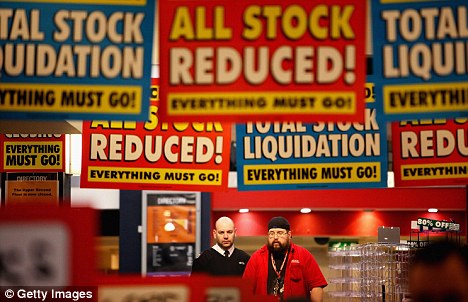
 A trip down
the high street will emphasise the continuing effects of the 2007 economic
crisis. Woolworths, Peacocks, La Senza were just some of the high street names
to collapse and today’s news highlights that the crisis is still claiming more
victims with shops like HMV and game questioning their futures. The perhaps more
shocking feature of the crisis, is the banks. Everyone has an expectation that
banks are safe...that’s what you lead when growing up, put your money in a
bank, they’ll look after it for you and often increase what you save with
interest. Well as the economic crisis hit, banks became a black spot, the news
of Northern Rock showed how bad banks can go wrong. The once well known bank
with a good reputation has now been nationalised, and is still remembered as
the bank in the crisis whose customers waited outside to try and get their
money before the bank went bust. With big branded and well known shops closing
down all around us and banks in trouble, the question that much of the public
was asking is what’s happening to our economy?

Well the
first thing to note is, while retailers are the visible every day victims of
the crisis, consumers, banks, the government and basically everyone with a
loan, any financed belongings or those who just like shopping are victims. The
BNP Pariahs price rise for credit was only the start. By February 2008 UK
consumer confidence hit a nine year low (Guardian, 2010) with inflation
reaching unprecedented levels, job losses due to business cut backs and
closures, consumer spending is only for the few and lucky. You may ask, why
then doesn’t everyone borrow money? If only it was that easy, the way the
recession works is, it affects everything in terms of the economy. The once
easy to get credit and loans from the banks is now near impossible to get your hands
on. Everyone is far too risky, and as a result those who have a mortgage are
much more likely to default, while those who want a mortgage, Good Luck!
 The housing
market is one which is beyond a doubt still suffering, not only is it difficult
to get a mortgage because banks don’t have the money and won’t lend it to
people because of the risk of default. The housing market has seen prices
falling at a dramatic rate, with those who had mortgages looking at futures of
negative equity (Guardian, 2010).
All of these
recessionary affects look like they are going to continue into the foreseeable future,
only this week are we seeing the continuous rippling consequences. The gaming
retailer GAME is one company in the headlines this week. It hit the news when
the gaming retailer failed to impress suppliers and as a result couldn’t get
its hands on the much awaited Mass effect 3! This seriously will affect sales,
reputation and customer loyalty as having the most up to date games on the
release date is a key success factor for this company. The losses from this are
substantial and the BBC reported that because of the sales loss, rent is likely
to go unpaid, resulting in the company possibly entering administration (BBC,
2012)! How many more high street retailers can possible disappear? And will
this recession ever end?
 Mass effect 3: Unavailable at Game stores (http://www.guardian.co.uk/business/2012/mar/12/game-warns-investors-shares-collapse)
The causalities
of the credit crunch are likely to continue, with companies like HMV and Water
stones already showing signs of following GAME. The outlook for the UK is
questionable and much argued, some say the housing market is on the increase
and money is getting easier to lend. However it’s hard to believe when we are
still seeing massive retailers closing on our high street, unemployment rising continuously
and for sale signs outside of houses for months or years (BBC, 2012)! It seems
the future of the economy is unpredictable and unknown.
Sources
used:
http://www.guardian.co.uk/business/interactive/2009/jan/22/recession
- Timeline of the recession

No comments:
Post a Comment